
How to Remove Water Stains on Walls & Ceilings
February 16, 2023
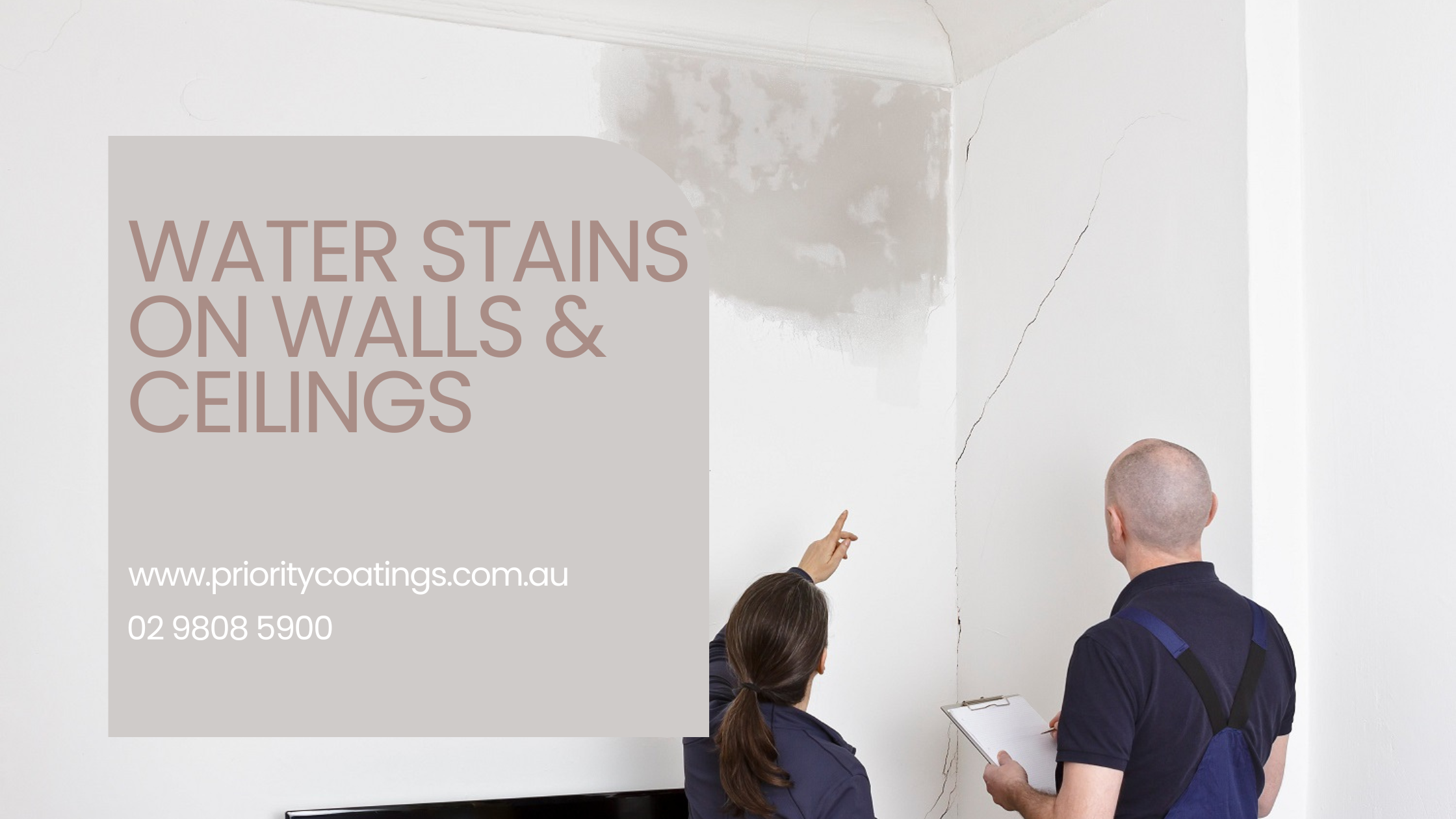
Written by the Priority One Coatings Team, Professional Painting Specialists
Water spots on walls and ceilings can be a frustrating problem for the homeowners of Sydney. This commonly detected issue is not only an eyesore but also a result of serious underlying conditions, including roof and plumbing leaks, overflowing gutters, or even condensation from the AC unit.
If you are worried about how to get rid of water stains from your living space and are tired of finding ways to cover them, you are at the right place. In this guide, we’ll walk together through some practical steps to effectively remove the water spots, leaving the walls and ceilings looking as good as new.
Get ready to transform your stained surfaces into a flawless masterpiece!
Causes of the Unwanted Water Spots on Your Ceilings and Walls

- High indoor humidity in your home can cause condensation to form on surfaces and create stains.
- Leaks from pipes, roofs or appliances can cause water seeps and lead to marks.
- If there are any cracks or holes in the roof, during heavy rain or snowfall, water can enter the interiors and leave brown spots on ceilings and walls.
- If exposed to water for a longer time, mould and mildew may appear and form spots.
How Do I Get Rid of Water Stains from My Home?
The brown spots of water can be damaging and often a sign of an existing issue that must be addressed first. While dealing with this condition, most of us have a common concern regarding painting over it, and we will also look into that.
Can You Paint Over a Water Stain on the Ceiling and Walls?
Yes, it is possible to cover the spot with the help of paint. First, you’ll need a stain-blocking primer or an oil-based paint to create a barrier that stops the water stain from showing through. Then, you can apply an emulsion paint if necessary. But if you want a long-term solution, just hiding it with a coat of paint will not help. It is always wise to identify the source of the issue first, fix it and then repaint the surface.

Fear not; following the process below, you can easily eliminate the problem from the root and stop it from coming back in a few days.
Step 1: Locate the Sources and Fix Them
To mitigate the stain from an old leak, first locating the problem source is essential. After finding the damaged area, seal it as soon as possible; thus, after rinsing off the stain, it can’t return to its old place.
It’s always essential to address the source of the problem to prevent water spots from reoccurring and to prevent further damage to the surface. If unsure of what’s causing the water stains, you can consult an expert to assess the situation.
Step 2: Remove the Water Stain
When the repair of the source is done, it’s time to carry on to the next step, cleaning the spots. Once the start of the problem is addressed, there are several practical methods for removing water stains. You can use some DIY mixtures to rain off the marks. Here, we are going to talk about the most effective remedies that can be used to find out the best result.
Liquid Soap Mixture
If the stain is not so serious, you can try a liquid soap solution mixed with warm water. First, prepare the mixture using these two ingredients at a 1:2 ratio. Then, it’s time to soak a soft cloth in the detergent and rub it gently over the stain. If the patch is on the wall, starting it from top to bottom would be better. Otherwise, it may have a new mark using the cleanser.
Bleach Solution
A bleach mixture is a solid solution for removing wall and ceiling stains. All you need to do is mix one part of bleach with three parts of water in a spray bottle to have the solution. It can be said to be a 10% bleach and 90% water mixture. If the bleach is unavailable, the bathroom cleaner can replace it because it contains bleach. It can also give protection from mould and mildew.
After preparing the solution, it’s time to apply it. Lightly mist the spray on the watermark at first. Then, let it soak for 30 seconds or so. After that, mist again. Repeat the process depending on the severity of the stain. After finishing the misting process, let them stay for 5 to 10 minutes and wipe the area in a dapping motion with a clean cloth. Let the area dry out. You can use a hair dryer in a cool setting to get a faster result.
Whether working on a wall or ceiling, the furniture around the place should be removed before spraying. If you are cleaning a ceiling and there is a wall nearby, it would be better to cover it with a long cloth to avoid accidents. Be extra careful with popcorn ceiling because bleach can chip away at it.

Baking Soda Mix
Mixing baking soda and water can also wash away water spots. Prepare the solution in a bowl using equal parts of baking soda and water to form a paste. Then, apply the paste over the stained area and let it sit for 30 minutes. Afterwards, wipe the area with a clean cloth to remove the stain and the paste. You can repeat the process until you have the desired result.
Vinegar Solution
Vinegar contains a powerful cleaning agent. Simply pour a spray bottle with white vinegar or mix it with lemon juice and baking soda to make it more intense. Then, mist it over the watermark and let it sit for an hour. After soaking it up using a damp cloth, wipe the area with a clean cloth to remove the stain. It may take a couple of tries, depending on the intensity of the mark. So, it’s better to try this solution when there is enough time to execute.
It’s always a good idea to test these solutions on a small, inconspicuous area first to ensure they won’t damage the surface. Also, wearing gloves and protecting the eyes is essential when using these acidic solutions. If you’re working with older buildings, it’s important to be aware that some older paints may contain hazardous materials, which is why professional lead paint removal services should be consulted when dealing with structures built before safety regulations were established.
Step 3: Repaint and Bring Back the Walls and Ceilings to Life

Sometimes, after removing the spots, the walls might seem discoloured. In that case, repainting the marked area may be necessary to get walls and ceilings back to life. You can do it on your own, but as the surface is critical to deal with, taking help from a professional house painter in Sydney will be the best idea. The expert residential painters will solve any underlying issue and use mould-resistant, water-resistant and high-quality paint that will provide full coverage over patches.
Tips to Prevent Water Stains
- Quickly fix any leaks in your home
- Take care of the areas prone to moisture and ensure ventilation
- Use water-resistant sealants on surfaces like bathroom tiles
- Invest in weatherproofing doors and windows to prevent outside moisture
Last Words
No one likes any wall or ceiling to remain stained in their sweet home. As prevention is always better, it is wise to invest time in your house maintenance and initially solve any issues that might cause water spots in future.

Moreover, if your walls are already stained, and you need expert help fixing them, Priority One Coatings is there for you. Being an experienced painting company in Sydney, we can bring your walls and ceilings back to life. Our residential painters in Sydney will work with you to choose the perfect colour and finish, and our expert team will handle the whole painting process with perfection.
If you are looking for businesses dealing with water damage or staining issues in their facilities, our commercial painting contractors can also provide professional solutions tailored to commercial properties.
Frequently Asked Questions
Why do water stains keep coming back?
Recurring stains usually indicate that the root cause — such as a leak or excess moisture — has not been properly fixed. Without addressing the underlying issue, stains will continue to bleed through new paint.
How can I prevent water stains in the future?
Regular maintenance is key — check your roof, plumbing, and ventilation systems, and address leaks quickly. Proper sealing and using moisture-resistant paints in high-humidity areas can also help prevent future issues.
When should I call professional painters?
You should contact professionals if:
- The stain is large or keeps returning
- There is visible mould or damage
- You’re unsure of the cause
- You want a long-lasting, high-quality finish
Experienced painters like Priority One Coatings can properly treat the surface and ensure the problem doesn’t come back.
What is the best product to use on water stains before painting?
A shellac-based or oil-based stain-blocking primer is the most effective option. In Australia, products such as Zinsser BIN and Zinsser Bulls Eye 1-2-3 are widely available and trusted by professional painters. These primers are specifically formulated to seal stains, odours, and discolouration before a topcoat is applied. Water-based stain blockers are also available for lighter stains and are easier to clean up.
Do I need to fix the leak before treating the stain?
Yes — absolutely. Treating the stain without fixing the source of moisture is a temporary measure at best. Water will continue to penetrate the surface, and the stain will return, often worse than before. If the leak is from a roof, plumbing, or an upstairs bathroom, have it professionally inspected and repaired before beginning any painting or stain treatment work.
Can water stains on ceilings be a sign of mould?
Yes. Where there is persistent moisture, mould growth is a real risk — and it can develop behind the surface as well as on it. If your water stain has a dark, greenish, or black discolouration, or if you notice a musty smell, mould may already be present. In this case, the affected area should be treated with an appropriate mould-killing solution before priming and repainting. For large or recurring mould problems, it is strongly recommended to consult a professional.
How do I know if the water damage has dried out completely?
It’s important not to rush the repair process. A surface that feels dry to the touch may still retain moisture underneath. A general rule is to wait at least 24–48 hours after the leak has been fixed before assessing the surface. In cases of significant water damage, it can take several days or longer for the wall or ceiling to dry fully. Professional painters often use moisture meters to confirm that a surface is ready for treatment.
Will the repainted area match the rest of my ceiling or wall?
Achieving a perfect colour match after a repair can be challenging, especially on older painted surfaces that have faded over time. The best results come from using the original paint colour where possible, feathering the edges of the new paint carefully, and applying a full coat across the entire ceiling or wall section rather than just spot-painting. If the original paint colour is unknown, a professional painter can colour-match using a paint spectrometer for a seamless result.
How much does it cost to treat and repaint water-stained walls or ceilings in Sydney?
Costs vary depending on the size of the affected area, the extent of the damage, and whether mould treatment or plaster repair is required. As a general guide, professional treatment and repainting of a water-stained ceiling in Sydney can range from $200–$600 for a single room. Larger jobs involving structural repairs or full-room repaints will be priced accordingly. Priority One Coatings offers free, no-obligation quotes for all water damage painting work across Sydney.
Need Help Fixing Water-Stained Walls or Ceilings?
Our residential painters can identify the cause, treat the surface properly and repaint it to a flawless, long-lasting finish.
Call Priority One Coatings on 02 9808 5900, email jenny@prioritycoatings.com.au, or request a free quote online and find out more about our full range of Sydney painting services.