
How Lead Paint Is Safely Removed From Sydney Homes
October 28, 2026
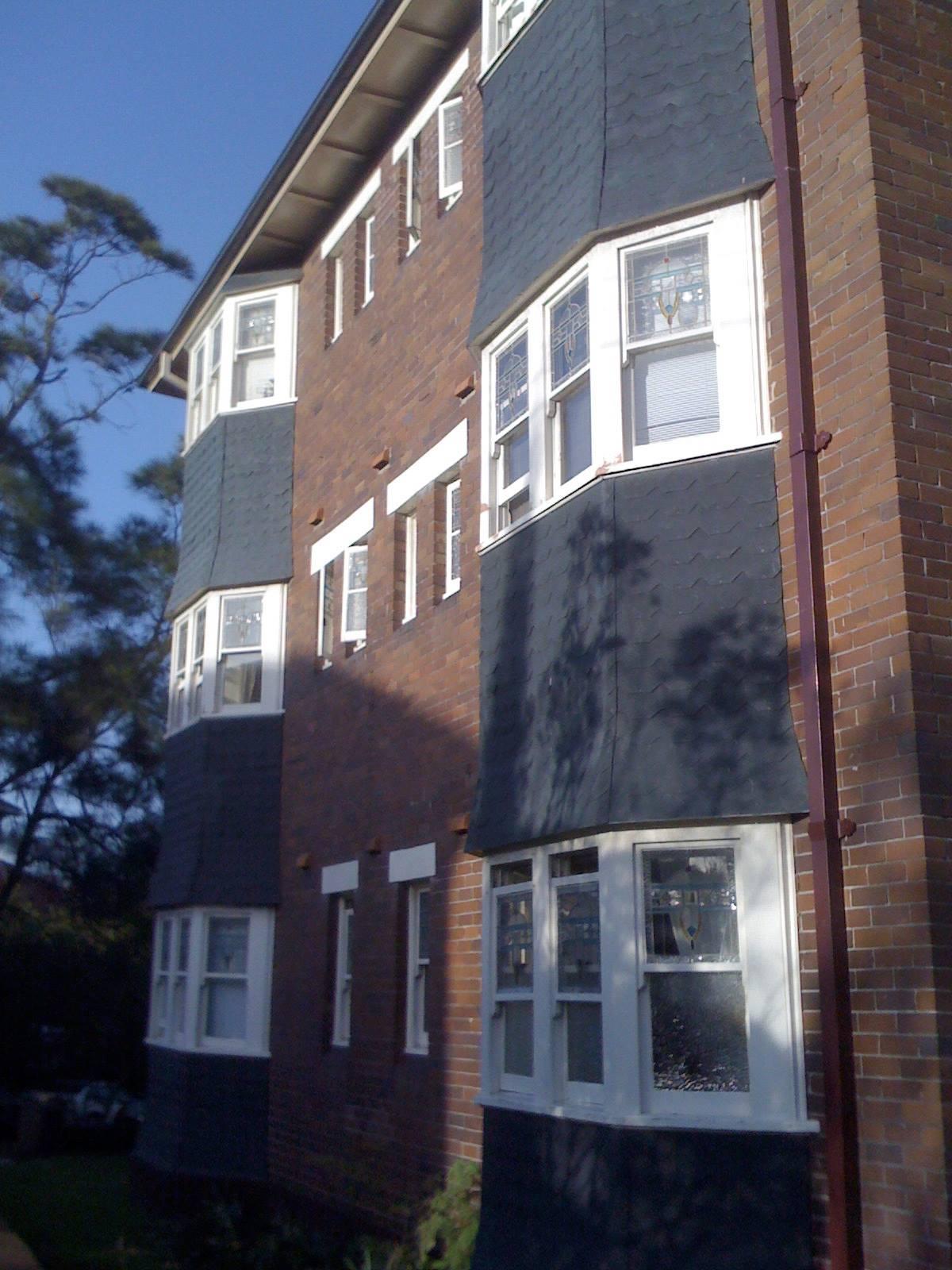
You’ve noticed the paint on your old weatherboards or window frames is flaking, and someone has mentioned the word “lead”. Now you’re wondering whether it’s safe to scrape it back yourself.
Short answer: probably not. Lead paint removal in Sydney is a job where the method matters more than the paint. Lead paint that’s sitting quietly under newer coats is rarely the problem. The danger starts the moment it’s sanded, scraped or burnt and turns into fine dust that settles through the house.
This guide walks you through how to tell whether your home is likely to have lead paint, your options for dealing with it, the removal methods that are off-limits, what a professional job involves from start to finish, and what to check before you hire anyone.
Key takeaways
- Most Australian homes built before 1970 have lead paint somewhere under the newer coats.
- Dry sanding, dry scraping, open flames and high-pressure blasting spread lead dust and should not be used.
- Removal isn’t always necessary. Sound paint can often be left alone or sealed in.
- Children, pregnant women and pets should stay away from the work area until clean-up is complete.
- A proper job ends with a thorough clean-up, safe waste disposal and a clearance check.
Does your Sydney home have lead paint?
If your home was built or last fully repainted before 1970, assume it has lead paint until a test says otherwise. Homes painted between 1970 and the late 1990s can also contain it, because lead limits in Australian house paint were tightened in stages rather than all at once.
Dulux’s technical advice on lead in paint puts it plainly: “Most Australian residential dwellings built before 1970 were coated with paints containing lead.” According to The LEAD Group, it wasn’t until 1997 that the allowable lead content in residential paint dropped to 0.1%.
That covers a big slice of Sydney. Federation houses in the Inner West, interwar bungalows on the North Shore and post-war fibro and weatherboard homes across the suburbs were all built in the lead paint era. The paint is most often found on window frames and sashes, doors and door frames, skirting boards, verandah posts, eaves and exterior weatherboards.
The age of the house is a strong clue, but only a test confirms it. Our guide on how to check whether your house has lead paint covers home test kits, laboratory samples and XRF testing in detail.
Why disturbing lead paint is the real danger
Lead paint becomes a health hazard when it breaks down into chips and dust that people swallow or breathe in. Children are most at risk because they put their hands and toys in their mouths, and lead dust settles exactly where they crawl and play: floors, windowsills and soil around the house.
Peeling and chalking paint sheds lead on its own. Renovation makes it far worse, which is why NSW Government’s LeadSmart renovation advice says pregnant and breastfeeding women and young children should be kept away from renovation work altogether.
The health benchmark in Australia is set by the National Health and Medical Research Council. In its 2015 statement on lead and human health, the NHMRC recommends that if a person’s blood lead level is above 5 micrograms per decilitre, the source of exposure should be investigated and reduced. That level was halved from the previous 10 micrograms per decilitre. If you’re worried someone in your family has been exposed, talk to your GP about a blood test.
So the question isn’t only “is there lead?” but “what is the safest way to deal with it?”
Remove, paint over or leave it alone?
Lead paint removal is only one of four ways to manage lead paint, and it isn’t always the right one. If the paint is sound and you aren’t renovating, sealing it in or leaving it undisturbed can carry less risk than stripping it. The Australian and New Zealand standard for this, AS/NZS 4361.2:2017, is built around assessing the paint first and then choosing a management strategy.
Here’s how the four options compare:
| Option | Best suited to | Upside | Downside |
|---|---|---|---|
| Leave it alone | Paint is intact, not chipping and not on a rubbing surface | No dust, no cost | Needs regular checks; becomes a hazard once it deteriorates |
| Paint over (encapsulate) | Sound paint you want to refresh without disturbing it | Less disruption; seals the old layers in | Only works if the old paint is firmly bonded; still there under the new coat |
| Cover (enclose) | Walls, ceilings or trims that can be lined or boxed in | Puts a physical barrier over the lead | Changes the finish; the lead stays in the building |
| Remove | Flaking, peeling or chalking paint, friction surfaces, or before a renovation | Takes the lead out of the house for good | Highest risk if done badly; needs containment, clean-up and safe disposal |
In practice, removal makes sense when the paint is already failing, sits on surfaces that rub or get bumped (windows, doors, stair rails), or will be disturbed anyway by a renovation. Repainting over flaking lead paint just traps a failing layer under a new one, and it will peel again before long.
Lead paint removal methods to avoid, and the ones that work
The safe way to remove lead paint is to keep it wet or contained so it never becomes airborne dust or fumes. Most of the methods people reach for first, such as an orbital sander or a heat gun on high, do the opposite.
Dulux and LeadSmart both rule out these methods on lead paint:
- Dry sanding or dry scraping, by hand or with power tools
- Sandblasting or high-pressure water blasting
- Open-flame torches or burning off old paint
- Heat guns on high settings or held in one spot for too long
- Sweeping up or using a household vacuum afterwards
- Burning painted timber offcuts
The methods professionals rely on include wet scraping, wet sanding, chemical strippers and low-temperature heat. Where machine sanding is needed, it’s done with extraction sanders fitted with HEPA filtration that capture dust at the source. Each one is chosen to suit the surface. A chemical stripper might be ideal on ornate timber mouldings and a poor choice on a large run of weatherboards.
The method is only one part of the job, though. Containment and clean-up matter just as much.
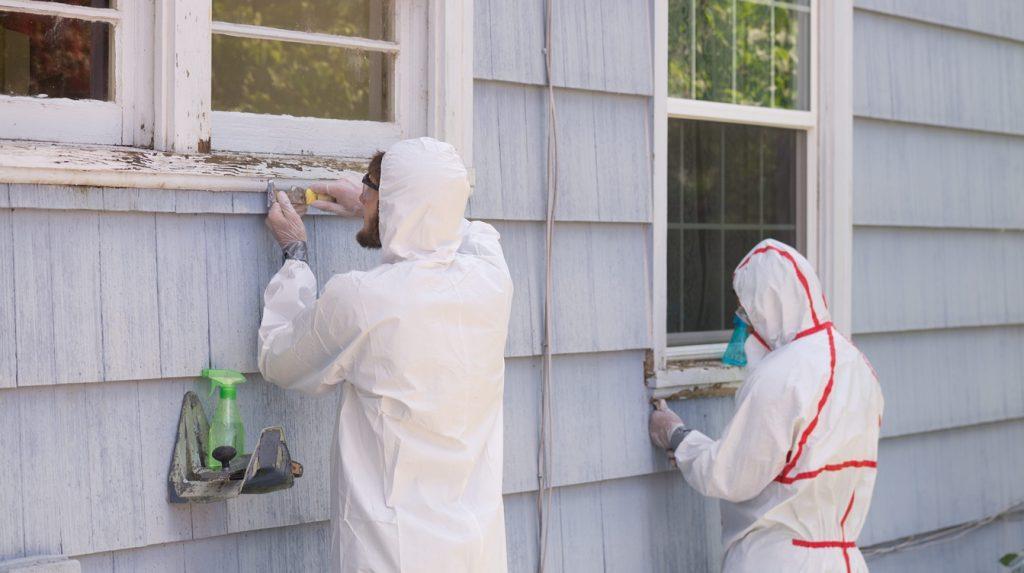
What professional lead paint removal in Sydney involves
A professional lead paint removal job follows a set sequence: assess, contain, remove, clean, dispose, verify and repaint. Skipping any step can leave lead dust in the house even when the walls look perfect. This is how our team at Priority One Coatings runs a typical job:
- Assessment and testing. We inspect every painted surface, check the layers and confirm lead with test kits, sending samples to an accredited laboratory where needed. This tells us how much of the house is affected and which approach suits each area.
- Site set-up. Work areas are sealed with double plastic sheeting, entrances are covered and windows and doors are closed. Outside, plastic goes down on the ground to catch debris before it reaches garden beds and soil.
- Removal. We use the safest method for each surface, from wet scraping to chemical strippers to HEPA-extraction sanding. Our crew wears respirators that meet Australian Standards.
- Clean-up. Dust and debris are wetted down and bagged, then surfaces are cleaned with a HEPA vacuum and wet-wiped. No brooms and no household vacuums.
- Waste disposal. Lead waste is sealed in heavy-duty plastic and taken to a certified waste transfer station, not your council bin.
- Clearance inspection. Before the area is handed back, it’s inspected to confirm the removal and clean-up have been done properly.
- Repair and repaint. Once the surfaces are clear, they’re repaired, primed and repainted with modern lead-free paint.
You can see more detail on each stage on our lead paint removal Sydney service page, and before and after photos in our recent lead removal projects.
What affects the cost of lead paint removal?
There’s no flat rate for lead paint removal, because the price depends on how much paint has to come off and how much containment the job needs. Two houses of the same size can be priced very differently.
The main factors are:
- The area to be treated, and whether it’s interior, exterior or both
- The type of surface: flat walls are quicker than windows, fretwork or ornate mouldings
- How many paint layers are present and how well they’re bonded
- Access, such as second storeys, roof eaves or tight side passages that need scaffolding
- How much containment the site needs, especially if the house is occupied during the work
- The volume of lead waste to be disposed of
- Repairs and repainting once the paint is off
The most reliable figure comes from an on-site inspection. Be cautious of any quote given over the phone that doesn’t mention testing, containment or disposal. Those are usually the steps being skipped.
Can you remove lead paint yourself?
You can legally do some lead paint work on your own home, but LeadSmart recommends hiring a professional trained in safe lead paint work practices to remove old paint. Most lead exposure from renovation happens because the work looked simple and the dust was invisible.
If you do take on a small area, follow the NSW Government’s guidance:
- Use wet scraping or wet sanding only
- Wear a respirator approved to AS/NZS 1716 with P1 or P2 filters, plus disposable coveralls
- Seal off the room with plastic and tape, and lay plastic under outdoor work
- Keep children, pregnant or breastfeeding women and pets well away until clean-up is finished
- Clean with a HEPA vacuum and wet-wipe surfaces with sugar soap, then rinse
- Shower and change after work, and wash work clothes separately
For anything bigger than a small patch, or for any home where young children live, a trained crew is the safer call. The same applies to rental properties and workplaces, where the owner has duties to tenants and workers. If you manage a commercial property, our article on treating lead paint in a commercial building covers what’s different there.
How to choose a lead paint removal contractor in Sydney
Choose a contractor who can explain exactly how they will contain, clean up and dispose of the lead, not just how they’ll strip the paint. Ask these questions before you sign anything:
- Do you test for lead before quoting, and will you use an accredited laboratory if needed?
- Which removal methods will you use on each surface, and why?
- How will you seal off the work area and protect the garden and soil?
- Where does the lead waste go?
- Is a clearance inspection included at the end?
- Do you hold public liability and workers compensation insurance?
- Can I see photos of lead removal jobs you’ve completed?
Priority One Coatings has been painting Sydney homes and buildings since 1988. We’re members of the Master Painters Association and our painters are Dulux-accredited. Our lead paint jobs follow the process above, and we carry public liability, home warranty and workers compensation insurance. We work on residential, strata, commercial and heritage properties across Sydney, and our residential painters handle the repaint once the lead is gone.
Lead paint removal FAQs
Is it safe to stay at home during lead paint removal?
It depends on the size and location of the job. For exterior work with good containment, many families stay home with windows and doors closed. For interior removal, young children and pregnant women should be out of the home until the clean-up and clearance check are finished.
Can I just paint over lead paint?
You can if the existing paint is sound and firmly bonded, but don’t sand it first. Painting over flaking lead paint doesn’t fix the problem, because the new coat fails along with the old one and the lead is exposed again.
How long does lead paint removal take?
It varies with the size of the job. A few window frames might take a day or two, while a full exterior on a weatherboard house can take much longer once set-up, clean-up and repainting are included. Your contractor should give you a timeline after inspecting the property.
How do I dispose of lead paint waste in NSW?
LeadSmart advises wetting down debris, sealing it in heavy-duty plastic sheets or bags and taking it to an approved part of your local waste facility. Check with your council first, because accepted waste and fees vary between facilities. Never burn painted timber.
Get lead paint removed safely
Lead paint in an older home is common, and it’s manageable. What matters is that nobody turns it into dust. If your paint is flaking, or you’re planning a renovation on a house built before 1970, get it tested and assessed before anyone picks up a scraper.
Call us on 02 9808 5900 or request a quote online, and we’ll arrange an inspection of your property.